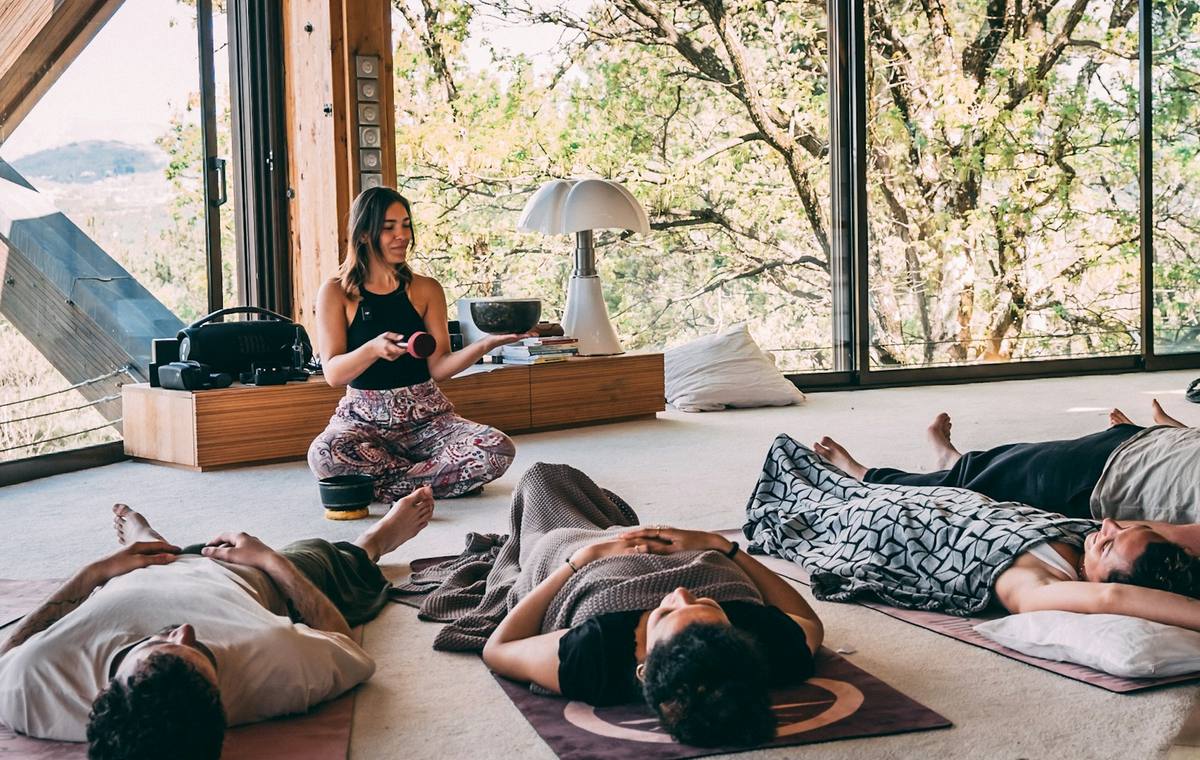
The brochure shows a hammock, a bowl of fruit and a person who has clearly never opened a spreadsheet. A week here, it suggests, and you go home repaired.
Part of that promise holds up. Rest is real, and a well-run retreat can send you home with more than a tan. Another part does not, because burnout is not a shortage of hammocks. Here is what the research says a burnout retreat can do, what it cannot, and how to choose one if you decide to go.
What burnout is, and what it is not
Burnout is what chronic stress at work becomes when nothing is done about it. The World Health Organization does not class it as a medical condition. Its classification of diseases lists it as an occupational phenomenon with three parts: exhaustion, a growing distance from the job or cynicism about it, and the feeling of no longer being good at it.
Two things follow from that definition. The cause sits in the work, so a remedy that leaves the work untouched is aimed at the wrong place. And burnout is not depression, although the two often travel together. A pooled analysis of the studies published between 2007 and 2018 found a clear overlap between burnout and depression, and far from a complete one. No booking form can tell which of the two you have, and that matters when the exhaustion is severe.
None of this is an argument against holidays. It describes what rest alone does: it bails out the boat without mending the leak. A retreat that is mostly rest, however beautiful, should be expected to follow the same curve.
What a retreat adds to a holiday
A retreat seems to outlast an ordinary holiday when it teaches you something you keep doing afterwards. Researchers in Vienna followed 120 people through three kinds of time off: an ordinary holiday, a holiday with some meditation in it, and a full meditation retreat. Ten days after coming home, the three groups looked much the same. Ten weeks after, those who had meditated were less tired and felt better than the ordinary holidaymakers.
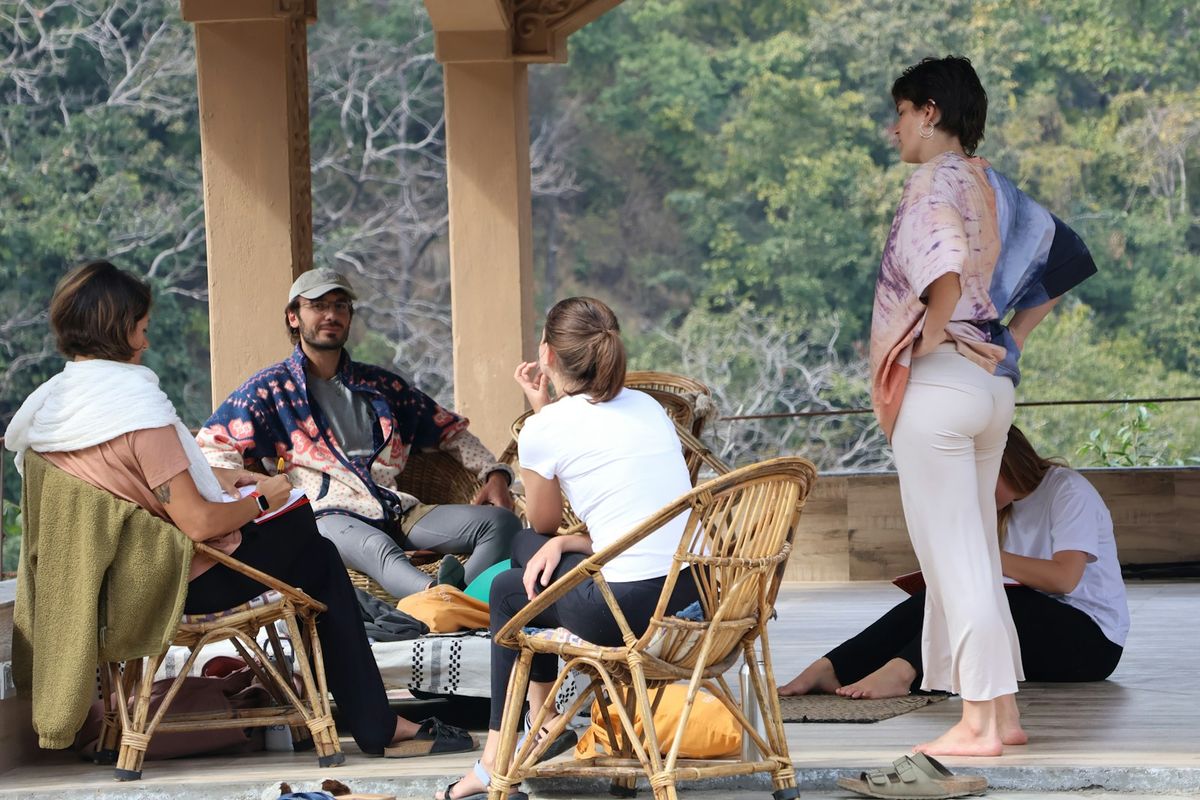
Much of what a retreat offers happens between sessions: unhurried time, and other people. Photo: Abhayaranya Yoga Ashram / Unsplash
The caveats are worth knowing. The Vienna volunteers already meditated, and nobody was assigned to a group at random. The retreat studies were mostly small, and not one of the 23 in the review looked for harmful effects. One study of a week-long wellness retreat in Australia found improvements that held six weeks later, with no comparison group and a lead author who had been a paid speaker at that retreat. And almost none of this research recruited people with burnout. It shows that retreats tend to do tired people good. It does not show that they treat burnout.
What a retreat cannot do
A retreat cannot change the job you go back to, and the job is where burnout comes from. The best evidence concerns doctors, a profession studied closely because so many of its members burn out. A meta-analysis of 19 controlled studies, covering 1,550 physicians, compared two kinds of programme. Those aimed at the individual, such as mindfulness or stress-management courses, brought a small benefit. Those that changed the work itself, such as schedules and workloads, brought a benefit more than twice as large.
The desk will still be there on Monday, with the same inbox. Photo: Vitaly Gariev / Unsplash
An older review of 25 burnout prevention programmes found the same pattern over time. Programmes aimed at the person reduced burnout for six months or less. Those that also changed something in the organisation lasted a year or more. In every case the benefit shrank with time.
A retreat is the purest form of a programme aimed at the person. It takes you out of the organisation altogether, which is both its charm and its limit.
When exhaustion is severe
Severe, long-lasting exhaustion heals far more slowly than a week or two away. A Swedish clinic followed 217 patients it had treated for stress-related exhaustion. Seven years after they first sought care, almost half still reported fatigue, 73% said they tolerated stress less well than before, and a third were still judged to be clinically exhausted.
Two practical points follow. If you can no longer work, if the low mood has spread to the parts of life that have nothing to do with the job, or if you have thoughts of harming yourself, the first appointment is with a doctor, and the retreat can wait. And an intensive retreat is not a rest. A systematic review of 83 meditation studies found unwanted effects in about 8% of participants, most often anxiety and depression, including in people with no history of either. Ten silent days and a bell before dawn are a lot to ask of a mind that is already worn out.
How to choose one, if you go
The most useful question to ask about a retreat is what you will still be doing a month after you leave. A few others narrow the field.
Rest or programme? Both are legitimate. Pure rest fades fastest. A programme that teaches one practice, whether meditation, yoga or simply a walk every morning, gives you something to carry home.
How intense is the day? Read the schedule before the photographs. If you are exhausted, look for late starts, free afternoons and the freedom to skip a session.
Who is on staff? Most retreats are run by teachers and hosts, not clinicians. There is nothing wrong with that, as long as nobody claims otherwise. Be wary of promises to cure, heal or reset anything.
What does it cost, all in? A bill that will worry you for six months is no remedy for stress. Donation-based stays exist, and so do places close to home.
What you change in the first two weeks back matters more than the week away. The research on fade-out suggests three things to arrange, ideally before you leave.
One change at work. A lighter load for a month, a meeting you stop attending, a conversation with your manager already in the diary. The programmes that last are the ones that touch the job.
One practice, kept small. Ten minutes of whatever the retreat taught you, at a fixed time of day. In the Vienna study, the lasting advantage went with the meditation, not with the scenery.
It is also worth keeping a free day between the journey home and the first day back. The clerks in the holiday study had lost part of their gain within three days.
Who it is for
A retreat suits someone who is tired but still functioning, whose job can be adjusted, and who wants to learn a way of resting that outlasts the week. That description fits a nurse, a teacher or a shop manager as well as an executive, and it is a pity that the market is priced mostly for the last of these.
The useful part of a retreat travels well: a daily walk costs nothing. Photo: Sweet Life / Unsplash
It suits less well someone whose job cannot change at all, since the return will undo the stay, or someone too depleted to enjoy it. It is also not the only way to get the useful part. Three days at home with the phone in a drawer, long nights, a daily walk and one new habit make a retreat in everything but the view. And the official definition keeps the word burnout for working life. People worn down by caring for a parent or a child are not counted in it, and they need the rest just as much.
The bottom line
A burnout retreat can give you real rest, a practice worth keeping and enough distance to see your job clearly. It cannot make the job different, and the evidence says that is where most of the lasting improvement comes from. Go for the rest and the practice, plan the return before you leave, and treat any promise of a cure as a reason to look elsewhere. Our guide to stress management covers what helps week to week, and meditation is a practice you can start before you book anything.
Meditation isn't mysticism or doing nothing — it's attention training. The difference from mindfulness, the main techniques, what the evidence (the 2013 JAMA review) really shows, and how to start.
The same dozen sleep tips appear everywhere; almost nobody says which have been tested. Twelve habits with what stands behind each, from a fixed wake-up time to a caffeine curfew, and when to see a doctor.
Short answer: no. A nap can top up a night, and sleep can be split in two if the total is enough, but a string of naps cannot stand in for the night. What the research says about polyphasic sleep, sleep debt and siestas.