


Lifestyle
Sichuan Beyond the Pandas: Chengdu, Chongqing, Jiuzhaigou and Mount Emei
Teahouses and pandas in Chengdu, a night on a sacred mountain, lakes the colour of gemstones and a city built in layers: a ten-day route through Sichuan.
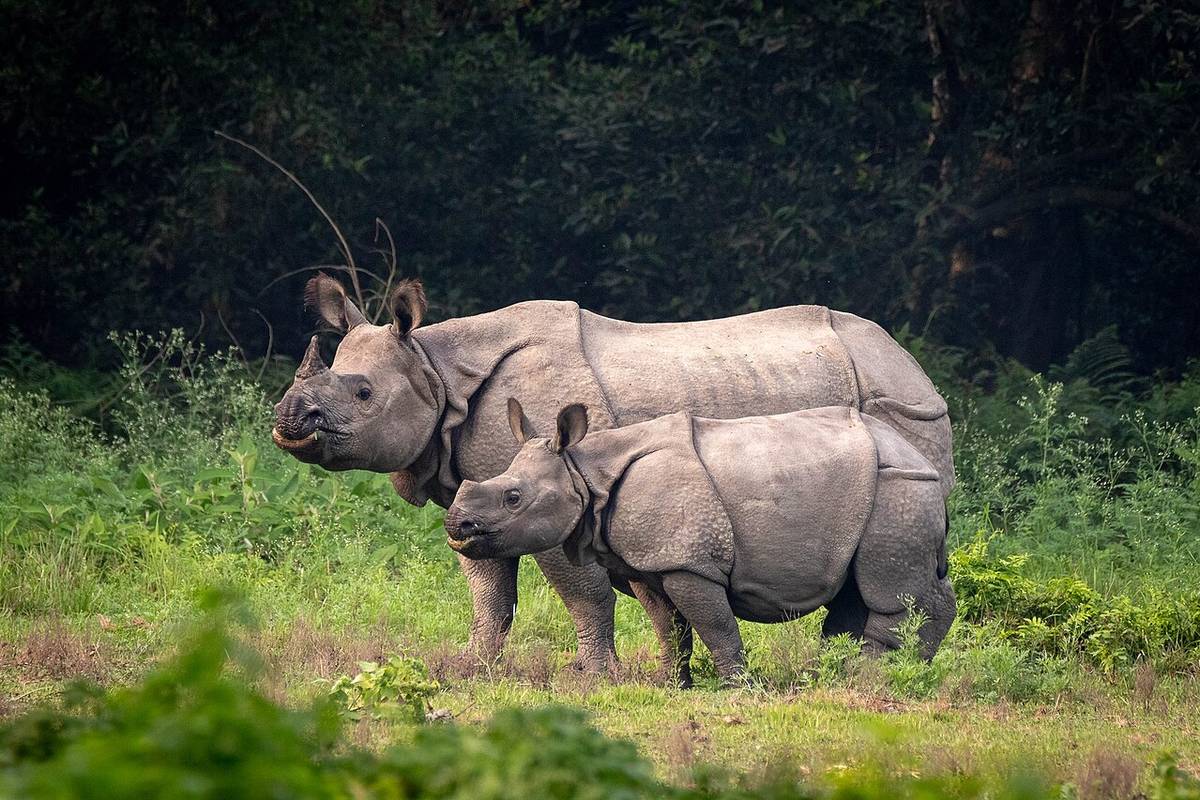
Nepal is a narrow country stacked on its side. From south to north the land climbs from the hot, grassy plains of the Terai, where rhinoceros graze in the river mist, to the white wall of the Himalaya. Between them lies the Kathmandu Valley, a bowl of old brick cities where temples still sit inside everyday streets.
This route follows the classic first trip. It begins with a slow few days around Kathmandu: three royal squares, two great stupas and the riverside temple of Pashupatinath. It drops south to the jungle of Chitwan National Park, climbs back to the lakeside town of Pokhara, and ends on foot in the Annapurna foothills, on trails you can match to the time and the legs you have. Two to three weeks is a comfortable pace.
The Kathmandu Valley holds three former royal cities, Kathmandu, Patan and Bhaktapur, now almost joined by suburbs. Together with the stupas of Swayambhu and Boudhanath, the Hindu complex of Pashupati and the temple of Changu Narayan, their old centres form a single UNESCO World Heritage site of seven monument zones, inscribed in 1979. The 2015 earthquakes damaged all seven, and you will still see scaffolding, fresh timber and new brick beside the old.
Kathmandu Durbar Square. The old palace square, also called Hanuman Dhoka, is the busiest of the three, with tiered pagoda temples, carved roof struts and pigeons on every step. Arrive early, then wander north through the market lanes of Asan and Indra Chowk.
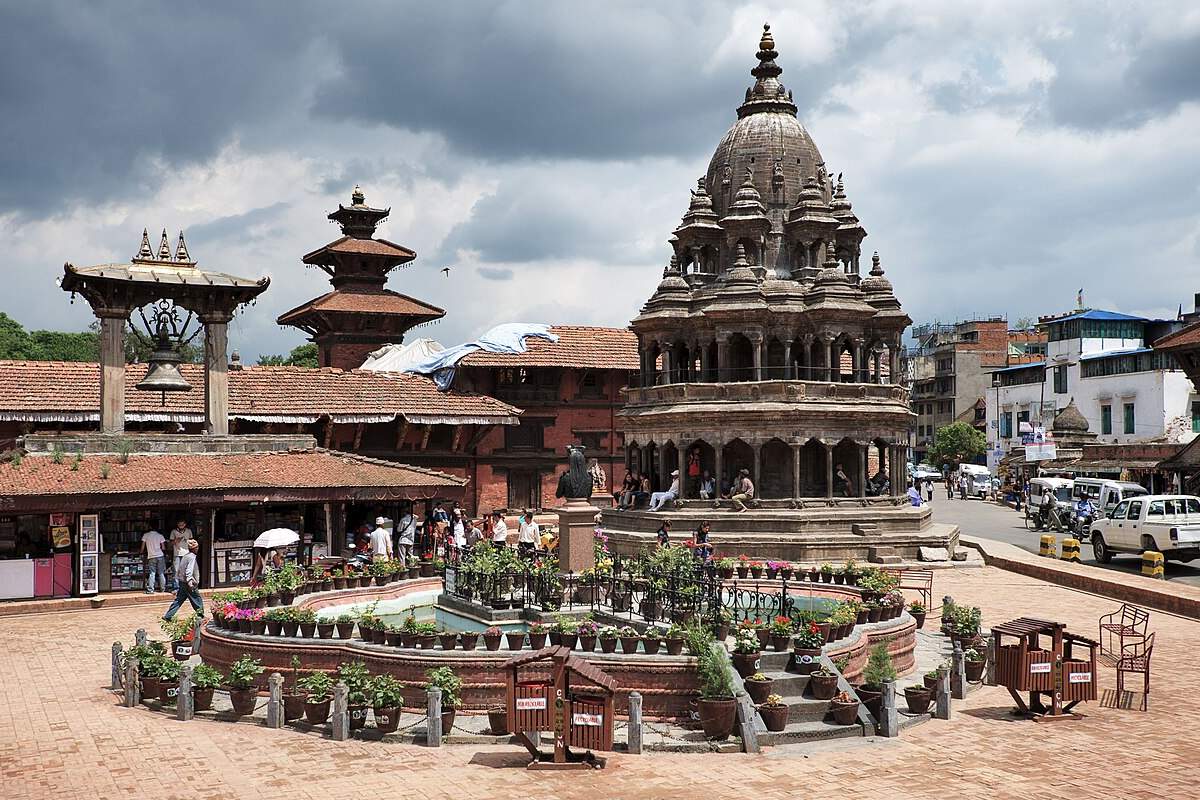
Patan. Across the Bagmati river, Patan is quieter and, for many visitors, the most beautiful of the three squares. The temples stand close together in front of the old palace, part of which now houses the Patan Museum, the best introduction to the bronze and woodwork you will see everywhere else.
Bhaktapur. Half an hour east, Bhaktapur feels the least changed. Its squares are mostly closed to traffic, and the five-tiered Nyatapola temple rises above Taumadhi Square. In Pottery Square, clay pots dry in rows in the sun. Stay the night if you can: the city is at its best in the early morning.
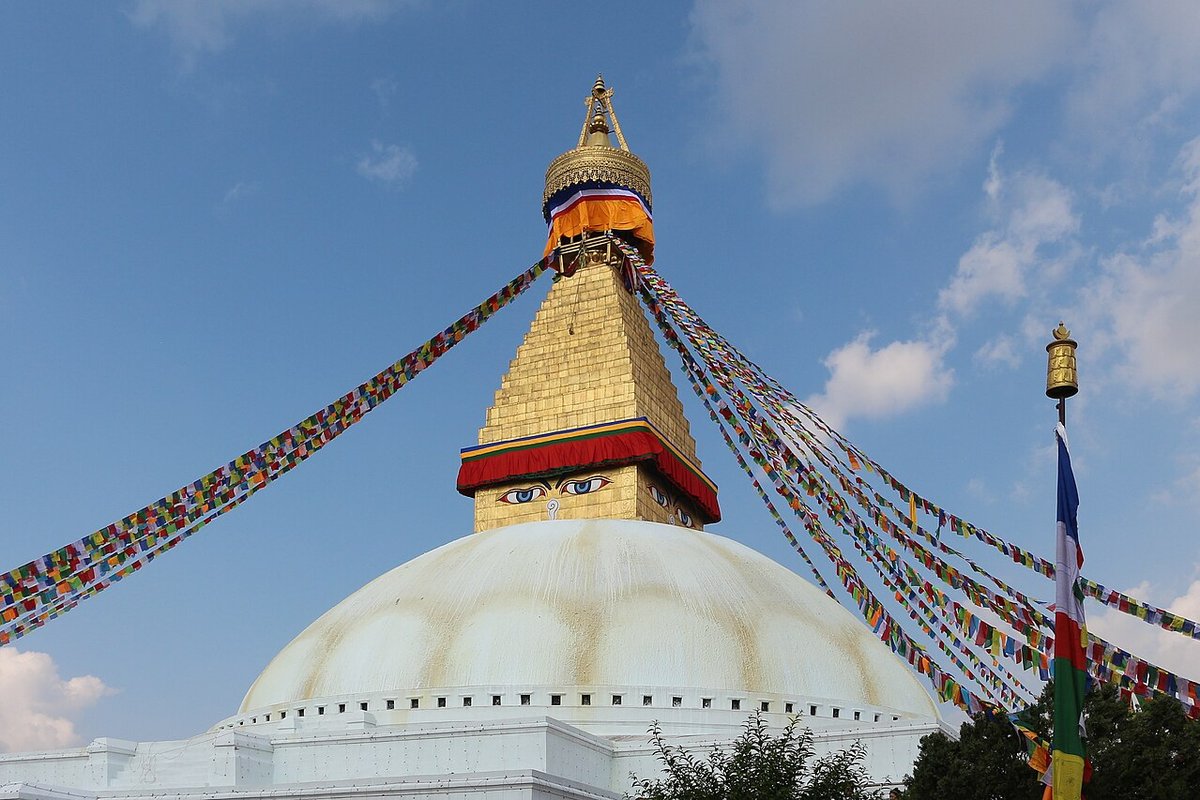
Swayambhunath. On a wooded hill west of the city, this stupa is reached by a long, steep stairway on its eastern side, watched over by resident monkeys (hold on to your snacks). The painted eyes of the Buddha look out in four directions, and on a clear day the view takes in the whole valley.
Boudhanath. On the other side of town, the great white dome of Boudhanath is one of the largest stupas in the world and the heart of Kathmandu's Tibetan Buddhist community. Monasteries and rooftop cafés ring the plaza. Pilgrims walk around the stupa clockwise, spinning prayer wheels; join them at dusk, when the chanting carries across the square.
Pashupatinath. A short walk from Boudhanath, on the banks of the Bagmati, stands Nepal's most important Hindu temple. Only Hindus may enter the main temple compound, but visitors can look in from the perimeter and walk the riverbank, where the stone platforms are, as Lonely Planet puts it, the country's holiest cremation site. Cremations take place in the open. Watch, if you choose to, from the opposite bank, quietly, and without photographing grieving families.
South of the hills, the Terai is another Nepal: flat, green and humid, with rice fields running to the Indian border. Chitwan, established in 1973 as the country's first national park, protects a stretch of riverine forest and tall elephant grass between the Rapti and Narayani rivers. UNESCO listed it as a natural World Heritage site in 1984, describing it as home to one of the last populations of the greater one-horned rhinoceros and one of the last refuges of the Bengal tiger.
Sauraha. Most visitors stay in this village of lodges on the park's northern edge, on the far bank of the Rapti from the forest. Two or three nights is the right length.
Inside the park. Entry is paid at the park gate: the park's own regulations list NPR 2,000 per day for foreign visitors, with lower rates for SAARC and Nepali citizens. Jeep safaris cover the most ground; a dugout canoe trip down the Rapti, gliding past gharial and mugger crocodiles basking on the banks, is the most peaceful. Guided walks go deeper into the forest. Walk only with licensed park guides. Rhinos, deer and birds are seen on most outings; tigers are present but seldom glimpsed.
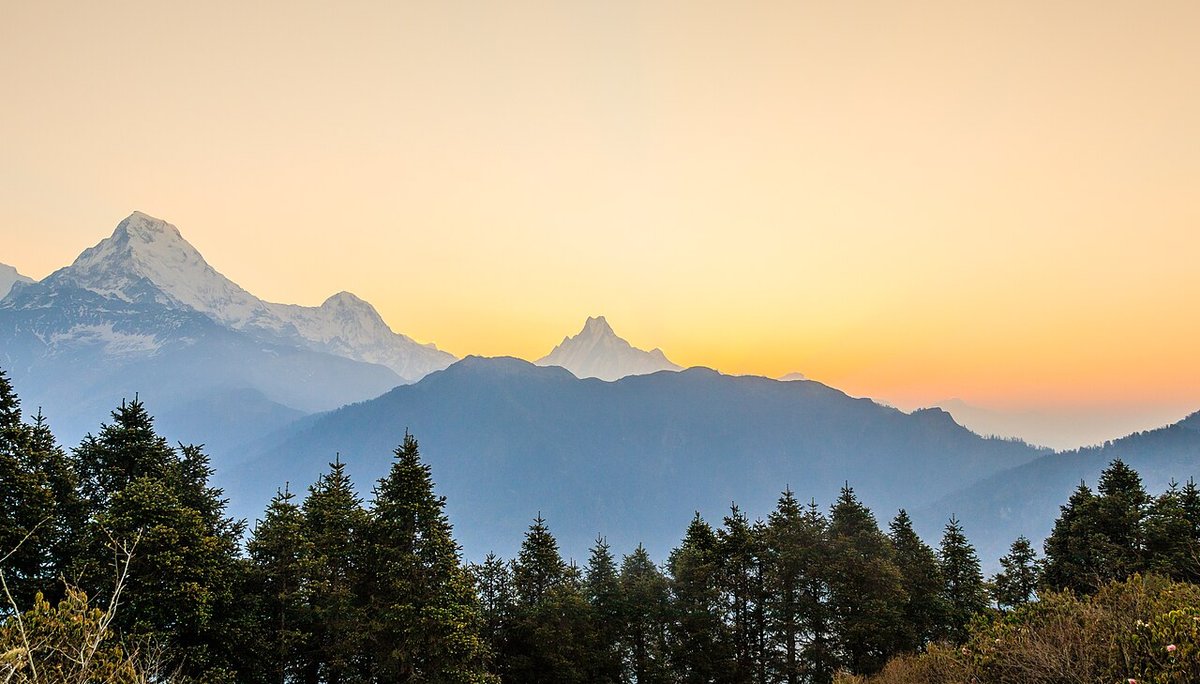
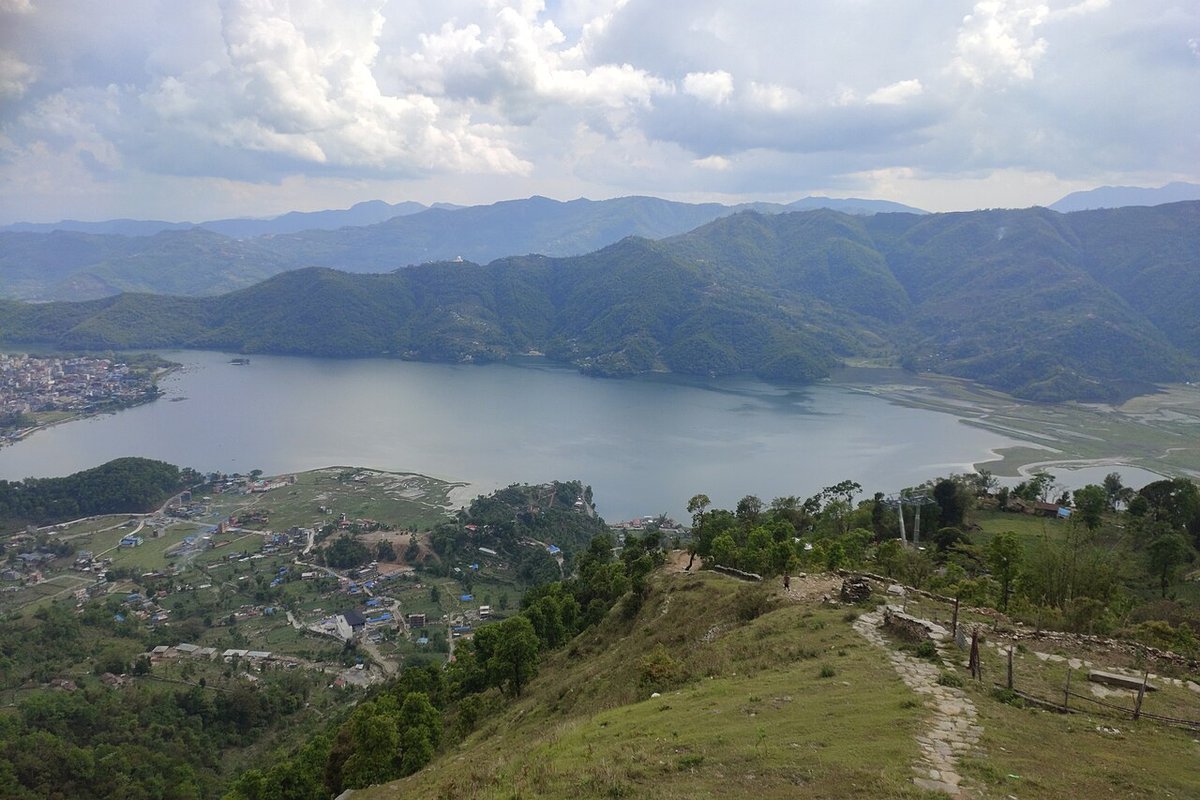
Pokhara is where most people come to rest, either before the trails or after them. The town spreads along the eastern shore of Phewa Lake, and on clear mornings, mostly in autumn and winter, the Annapurna range stands straight up behind it, with the fishtail peak of Machhapuchhre at its centre.
Phewa Lake. Lakeside, the strip of guesthouses, cafés and bookshops along the shore, is the base. Rent a wooden rowing boat and paddle out to the island temple of Tal Barahi early, when the water is still.
Sarangkot. The ridge above the north shore is the town's sunrise viewpoint, reached by road or by a steep walk of a couple of hours. As the sun comes up, the light catches the peaks one by one. It is also the launch site for tandem paragliding flights down to the lake.
The World Peace Pagoda. On the wooded ridge across the lake, a white Buddhist stupa looks back over the water to the town and the mountains. Take a boat across and climb the forest path; shoes come off on the stupa itself.
The Annapurna Conservation Area begins just beyond Pokhara, and its trails are some of the most walked in the Himalaya. Village teahouses offer a bed and dal bhat every few hours, so you carry little and sleep under a roof. Three routes cover most trips.
Ghorepani and Poon Hill. The short trek, usually four or five days from Pokhara, climbs through rhododendron forest and stone-stepped villages to Ghorepani. Before dawn, trekkers walk up to Poon Hill, at 3,210 metres, for a sunrise view across Dhaulagiri and the Annapurnas. It is steep, with thousands of stone steps, but stays at moderate altitude.
Annapurna Base Camp. The trek to the Annapurna Sanctuary, a high glacial amphitheatre ringed by peaks, usually takes a week to ten days. The route follows the Modi Khola gorge past Chhomrong and ends at base camp, at about 4,130 metres. The final days are above the height where altitude sickness becomes a real concern, and the upper valley is exposed to avalanches after heavy snow, so check conditions locally.
The Annapurna Circuit. The long loop around the massif crosses the Thorong La pass at 5,416 metres and takes around two to three weeks on foot. Roads now reach much of the lower circuit, and many trekkers ride the first stages by jeep. It is a serious high-altitude walk that needs time and a flexible schedule.
Permits and the guide rule. Every foreign trekker needs an Annapurna Conservation Area entry permit, which costs NPR 3,000 (NPR 1,000 for SAARC nationals) and can be bought in Kathmandu or Pokhara or online through the official ACAP e-permit site. Since April 2023, Nepal Tourism Board rules have required foreign trekkers in national parks and conservation areas to walk with a licensed guide, and TIMS cards (the trekkers' registration card, NPR 2,000 for most foreigners) are no longer issued to independent trekkers, as the Kathmandu Post reported at the time. Enforcement has been uneven on some trails, and agencies disagree on whether checkpoints still ask for the TIMS card, so plan on hiring a licensed guide through a registered agency, which will also arrange the paperwork.
Altitude. Above roughly 2,500 metres, anyone can develop altitude sickness, whatever their fitness. Climb gradually, build in rest days, and take headache, nausea, unusual tiredness or breathlessness at rest seriously; the CDC's advice for travellers is that symptoms that worsen are a signal to go down. Before a trek to base camp or over the Thorong La, talk to a travel-health professional about your route, and make sure your travel insurance covers trekking at that height and helicopter evacuation.
Dal bhat. Rice, lentil soup, a vegetable curry, greens and a sharp pickle, refilled until you stop the cook. Most Nepalis eat it twice a day.
Momos. Steamed dumplings filled with buffalo, chicken or vegetables, served with a tomato and sesame chutney. Try them fried too, or jhol, in a spiced broth.
Newari food. The Newar cities of the valley have their own kitchen. Look for bara, a savoury lentil pancake; chatamari, a thin rice-flour crêpe with toppings; yomari, a steamed sweet dumpling; and samay baji, a festive plate of beaten rice, spiced meat, soybeans and pickles. In Bhaktapur, finish with juju dhau, the "king of curds", a rich, sweet buffalo-milk yoghurt set in clay pots that draw out moisture and give it a dense, custard-like texture, as the Nepali Times explains.
Tea. Milky, sweet, spiced chiya is poured in small glasses at every stop.
Getting there. Almost every international visitor flies into Tribhuvan International Airport in Kathmandu. Pokhara also has an international airport, opened in 2023, but international services there have been rare, so plan on Kathmandu.
Visas. Most nationalities can get a tourist visa on arrival at Kathmandu airport or apply online in advance. Lonely Planet lists fees of US$30 for 15 days, US$50 for 30 days and US$125 for 90 days. Nepal has been moving its visa process online, so check the current procedure on an official Nepal embassy site before you travel.
Getting around. Tourist buses link Kathmandu, Pokhara and Sauraha, each leg taking most of a day on mountain roads; domestic flights from Kathmandu to Pokhara or to Bharatpur, near Chitwan, take well under an hour but are weather-dependent, so leave slack in your plans.
Money. The currency is the Nepalese rupee. ATMs are easy to find in Kathmandu and Pokhara, but there are few or none on the trails, so carry enough cash for a trek, including park fees and tips for guides and porters.
When to go. According to Lonely Planet, October and November are the peak months, with clear skies after the monsoon; spring, from March to May, is the second window, with rhododendrons in flower on the Annapurna trails. Winter suits lower treks. The June to September monsoon brings leeches, cloud and landslides.
Respect. Walk clockwise around stupas and prayer wheels, take off your shoes in temples and homes, use your right hand to give and receive, and ask before photographing people. Dress modestly at religious sites, covering shoulders and knees.
A two-week route:
With a week more, swap the Poon Hill trek for Annapurna Base Camp; with a month, the Circuit.
Nepal is easy to rush, chasing one more viewpoint, one more temple. It gives more to the traveller who sits on a stupa step at dusk, drinks a second glass of tea in a teahouse, and lets the clouds lift in their own time. If you want help settling into that pace, our notes on meditation are a good companion, and for slow travel further west, try Sichuan beyond the pandas.
Checked in November 2026. Confirm timetables, prices and entry rules before you go.
Part of our reading guide on travel & retreats.
Teahouses and pandas in Chengdu, a night on a sacred mountain, lakes the colour of gemstones and a city built in layers: a ten-day route through Sichuan.
A Hanseatic port, a railway that drops 860 metres, glaciers, hairpin bends and an Art Nouveau town: an eight-day route up Norway's fjord coast.
Greener and gentler than the south: Tangier's medina, Tetouan's Andalusian souks, the beaches of the Tamuda Bay and the blue town of Chefchaouen.