


Lifestyle
Sichuan Beyond the Pandas: Chengdu, Chongqing, Jiuzhaigou and Mount Emei
Teahouses and pandas in Chengdu, a night on a sacred mountain, lakes the colour of gemstones and a city built in layers: a ten-day route through Sichuan.
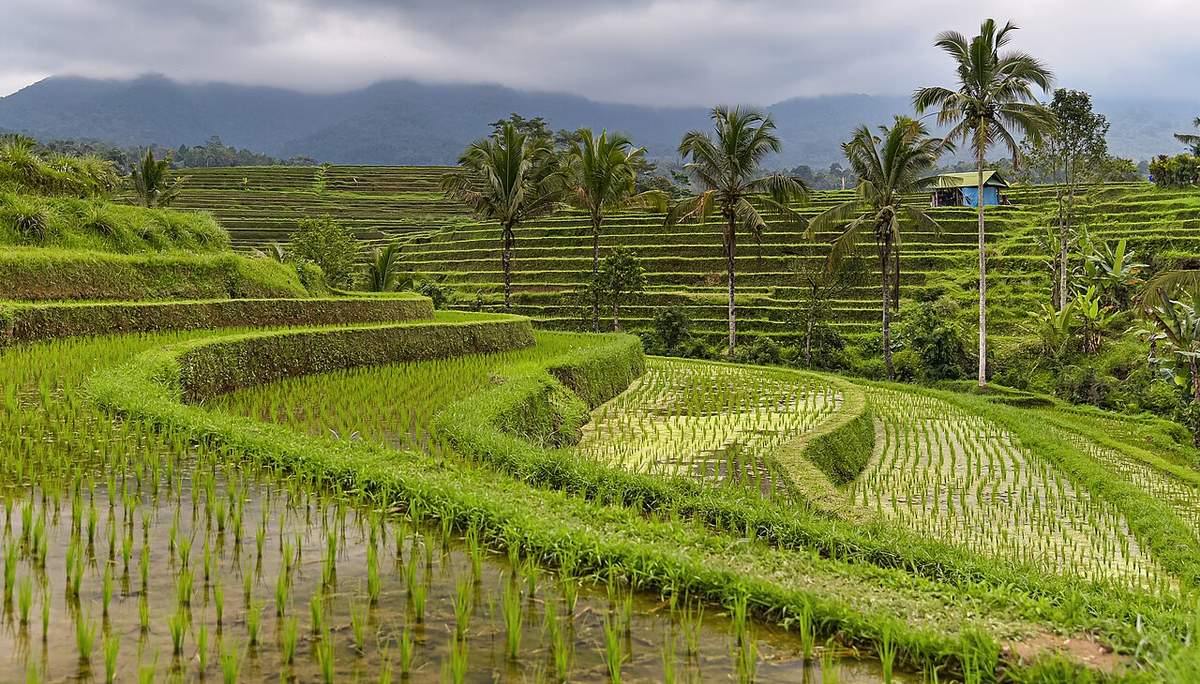
Bali is a small island with a crowded reputation. Beach bars and scooter traffic are real, but so is the other Bali: the one where every house compound has its family temple, where a palm-leaf tray of flowers and rice is set on the pavement each morning, and where the rice terraces are still watered by village cooperatives that are more than a thousand years old. The island is Hindu in a mostly Muslim country, and its ritual life runs through everything, from a temple procession stopping traffic to the incense on a taxi dashboard.
This route covers the places worth a slow look: Ubud's rice fields, temples and ridge walks; the cliffs and surf of Uluwatu; the quiet valleys, black-sand coast and great temples of the east; a sunrise climb up Mount Batur; and the Gili Islands, three specks of sand off Lombok with no cars at all. Two weeks is a comfortable pace.
Ubud sits in the hills of central Bali, the island's home of painters, dancers and woodcarvers, and now of yoga studios too. The town is busy, but a short walk in any direction takes you into paddy fields. Give it three or four days.
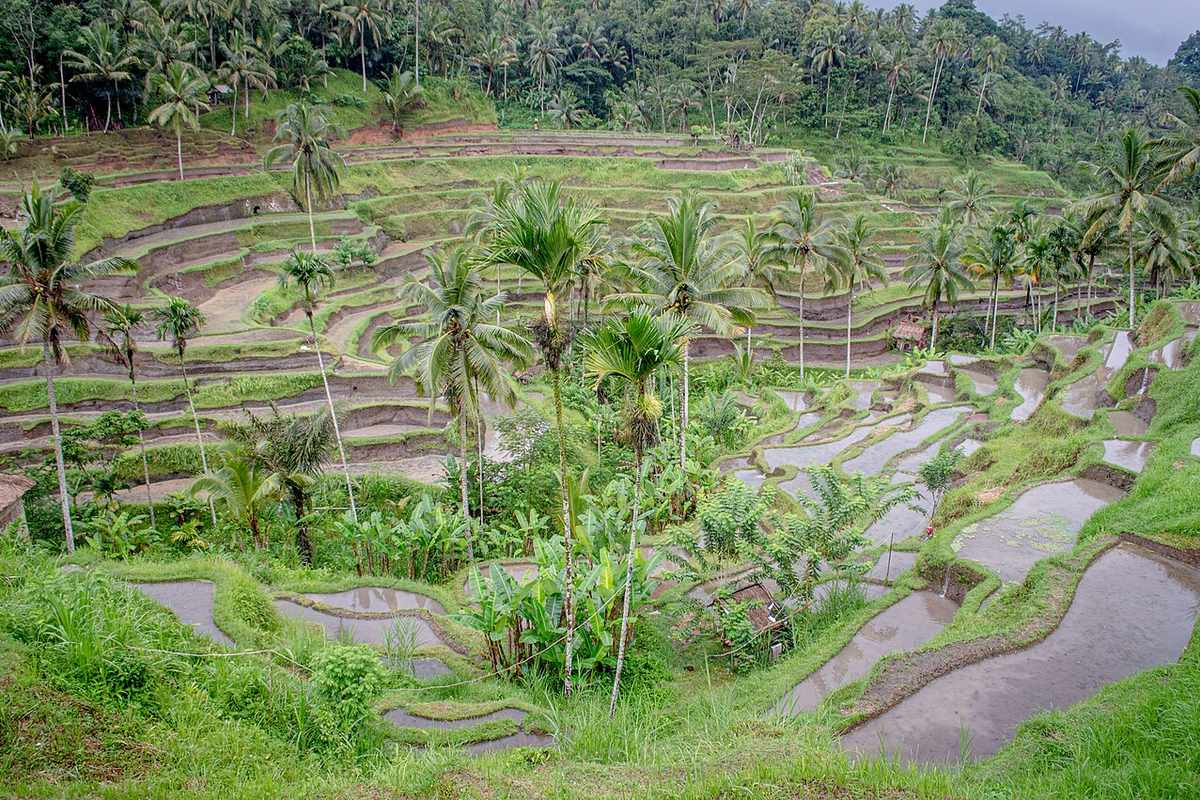
The rice terraces. Tegallalang, north of town, is the famous one: steep, curving terraces falling into a palm-filled ravine, best seen early before the tour buses arrive. For something larger and calmer, drive west to Jatiluwih, on the slopes of Mount Batukaru, where terraces spread across a whole mountainside. Jatiluwih lies within the UNESCO World Heritage cultural landscape inscribed in 2012 to protect subak, the Balinese system of irrigation run by farmers' cooperatives around water temples since the 9th century. UNESCO ties it to Tri Hita Karana, harmony between the spirit, people and nature; walk the field paths, water running at your feet, and the idea needs no explaining.
The Campuhan Ridge walk. From the western edge of town, a paved path runs along a grassy ridge between two jungle valleys. It is free, easy, and at its best just after sunrise, when the air is cool and the light is low.
The Sacred Monkey Forest. At the southern end of Ubud's main street, a patch of old forest with giant banyan trees shelters a large troop of long-tailed macaques and three temples: Pura Dalem Agung Padangtegal, Pura Beji and Pura Prajapati. The main temple is still used for worship. The monkeys are wild: carry no food, zip away sunglasses, and do not touch them.
Temples and evenings. Evenings are for traditional dance in palace courtyards and village temples. Pura Taman Ayun, the royal water temple at Mengwi, belongs to the same UNESCO listing as Jatiluwih and makes a good stop on the drive west. Ubud is also the island's easiest place for a yoga class or a morning of meditation.
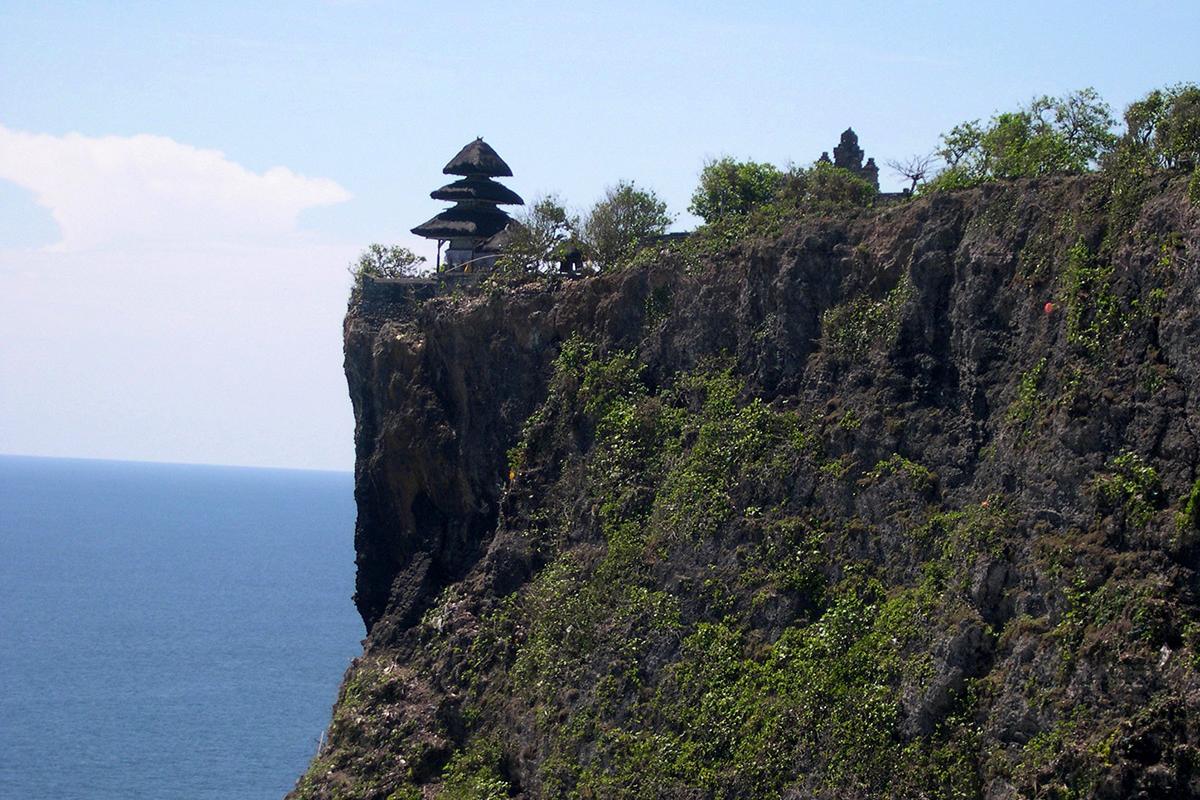
South of the airport, Bali narrows into the Bukit peninsula, a dry limestone plateau ending in high cliffs above the Indian Ocean. Its western tip, Uluwatu, is a world away from Ubud: sun-bleached scrub, white-sand coves at the foot of long staircases, and famous surf breaks.
Pura Luhur Uluwatu. One of Bali's sea temples, it stands on the very edge of a sheer cliff high above the waves. Visitors stay outside the inner sanctum, but the clifftop paths give the views. Sarongs are provided at the entrance. The resident monkeys are notorious for grabbing sunglasses and phones; hold on to your things.
The Kecak dance. At sunset, an amphitheatre beside the temple hosts the Kecak: dozens of men in concentric circles chanting "cak-cak-cak" while dancers act out an episode of the Ramayana, the sun dropping into the sea behind them. It needs its own ticket, and seats fill early.
Beaches and surf. The Bukit's beaches, among them Padang Padang, Bingin and Dreamland, are reached by steps cut into the cliff. The famous breaks here are over shallow reef and suit experienced surfers; beginners do better with a surf school on a gentler beach break (more in our surfing guide). Swim where lifeguards suggest: rip currents on the south coast are strong.
East Bali is the island in a slower gear. The roads wind through valleys under Mount Agung, Bali's highest and most sacred mountain, and the crowds thin quickly.
The Sidemen valley. Rice fields, small villages and weaving workshops: Sidemen is what many travellers hoped Ubud would be. Stay two nights above the paddies and walk between villages.
Besakih. On the south-western slope of Agung, Pura Besakih is Bali's mother temple, a complex of dozens of temples climbing the mountainside in terraces. It is the island's most important religious site and often busy with ceremonies. Go with a local guide, dress properly, and expect to stay outside the inner courtyards.
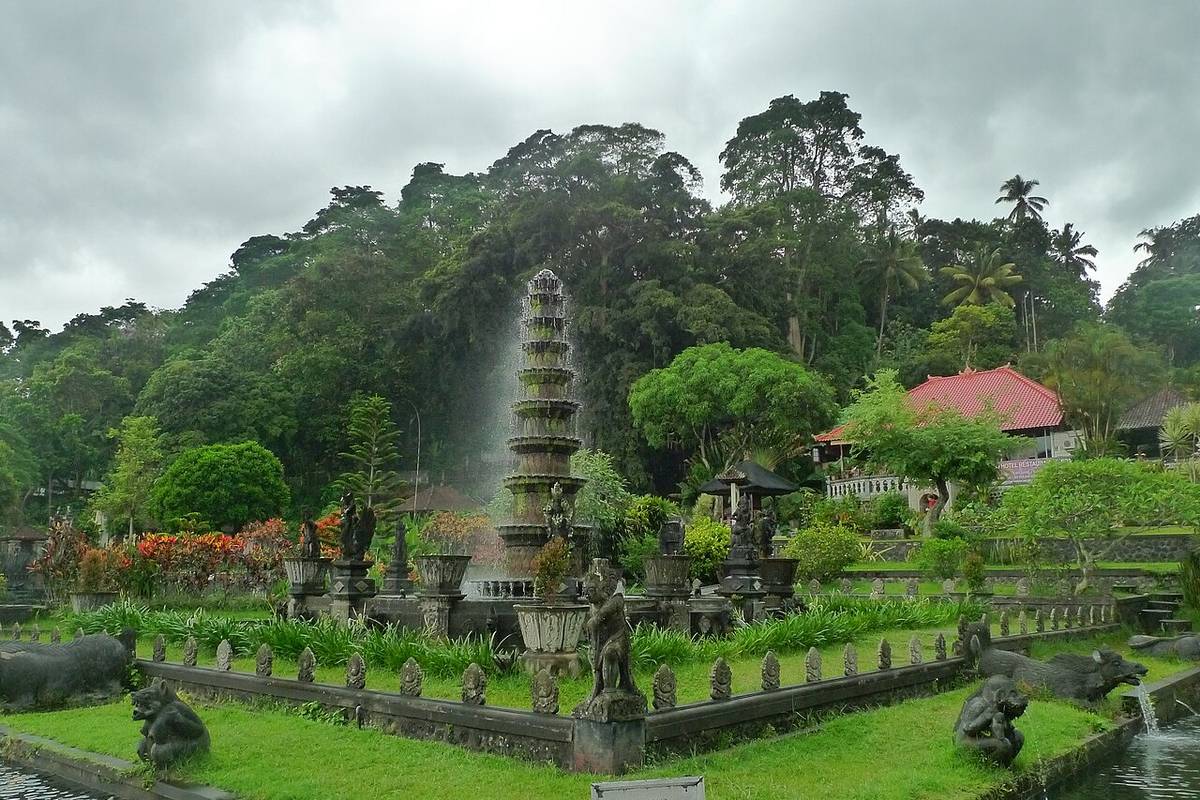
Tirta Gangga. Built for the Raja of Karangasem in the mid-20th century, this water palace is a garden of pools, fountains and stepping stones set among stone statues, with rice terraces climbing the hills around it. Go early, before the day-trippers.
Pura Lempuyang. About ten kilometres north-east of Tirta Gangga, Pura Lempuyang is a group of seven temples on the slopes of Mount Lempuyang and one of the holiest sites in east Bali. Its split gate framing Mount Agung is the "Gates of Heaven" photograph; the queue can last hours, and the "lake" in the pictures is a mirror under the lens. The long climb through the forest to the upper shrines is where the quiet is.
Amed. On the north-east coast, Amed is a string of fishing villages along black-sand bays, with outrigger boats pulled up on the beach and calm, clear water for snorkelling from the shore. The shipwreck off nearby Tulamben is one of the island's best-known dives.
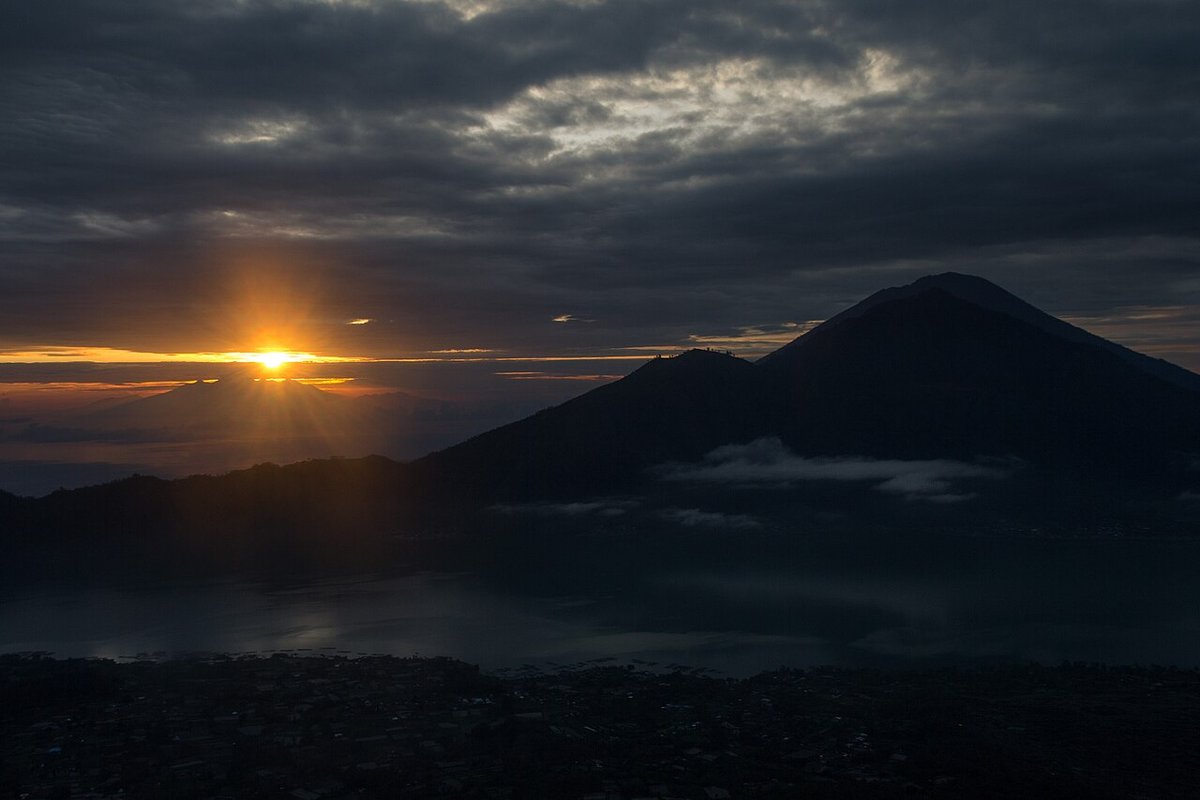
Mount Batur is an active volcano of 1,717 metres rising from a vast caldera, with Lake Batur curled around its foot. The lake and its temple, Pura Ulun Danu Batur, feed the island's irrigation system and are part of the same UNESCO landscape as the rice terraces.
The sunrise trek. The classic way to see it is from the summit at dawn. Treks leave in the dark from villages at the foot of the mountain, with local guides; the climb takes around two hours on loose volcanic gravel. Picture the scene: headtorches threading up the slope, a cold wind at the crater rim, then the sky turning orange behind the dark cone of Mount Agung. Bring a warm layer, proper shoes and water.
Know the mountain. Batur and Agung are both active, and access can close at short notice. The Australian government's Smartraveller advice asks travellers to check with local authorities first and respect exclusion zones.
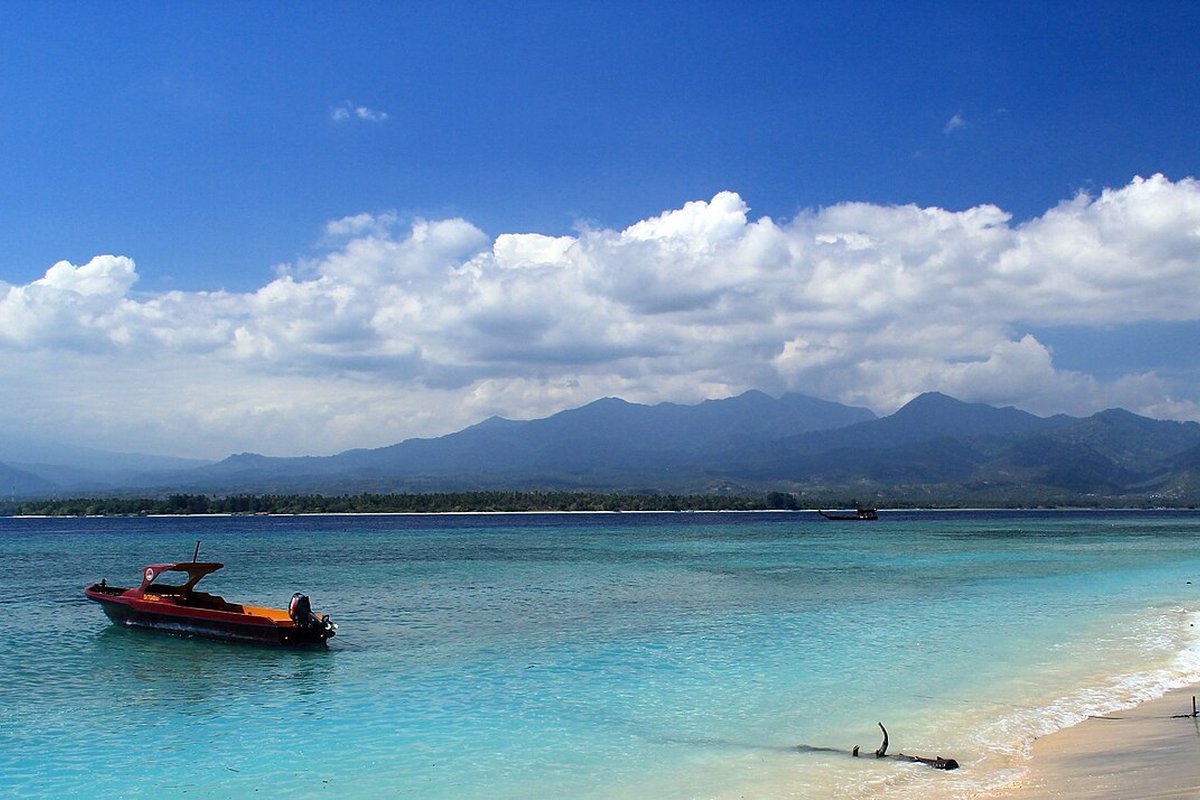
Off the north-west coast of Lombok, Bali's neighbour to the east, lie three small islands: Gili Trawangan, Gili Meno and Gili Air. Motorised vehicles are not allowed on any of them: you walk, cycle, or ride a cidomo, a small horse-drawn cart. The silence after Bali's traffic is the first thing you notice.
Choosing an island. Gili Trawangan is the largest and liveliest, with bars and dive schools. Gili Meno, in the middle, is the quietest. Gili Air, closest to Lombok, sits between the two: relaxed cafés, good snorkelling, and a village that still feels lived in. Snorkel close to shore; currents between the islands can be strong.
Getting there. Fast boats leave Bali daily, mainly from Padang Bai and Sanur, and take roughly one and a half to two and a half hours depending on the island. Book an established operator and watch the weather: the crossing can be rough. The slow, cheap alternative is the public ferry from Padang Bai to Lembar on Lombok, then onward by road and boat.
Balinese cooking rests on base genep, a spice paste pounded from shallots, garlic, galangal, turmeric, chillies, candlenut and shrimp paste, which gives the food its deep, warm flavour.
Babi guling. Spit-roasted suckling pig, stuffed with spice paste and turned for hours over a fire, served with crackling, lawar and rice. A ceremonial dish turned lunchtime staple; small warungs often sell out early.
Betutu and sate lilit. Bebek or ayam betutu is duck or chicken rubbed with spices, wrapped in banana leaves and slow-cooked until it falls apart. Sate lilit is minced fish mixed with coconut and spices, wrapped around lemongrass and grilled. Both turn up on nasi campur, rice with a little of everything, the best everyday lunch on the island.
Across the water. On the Gilis and Lombok, look for ayam taliwang, grilled chicken with a fiery chilli glaze, and plecing kangkung, water spinach with a fresh tomato and chilli sambal. Finish anywhere with pisang goreng, fried banana, and a thick Balinese coffee.
Visas. Many nationalities can get a 30-day visa on arrival, extendable once. The simplest route is the electronic version, the e-VOA, bought before you fly on the official Indonesian immigration e-Visa site, which also explains the digital arrival card all travellers must complete in the days before arrival. Check the fee and your eligibility there.
The Bali tourist levy. Since February 2024, foreign visitors to Bali pay a tourist levy of IDR 150,000 per person, separate from the visa. Pay it on the official Love Bali site or its app before you travel, and keep the voucher that arrives by email to show if asked. Payments are not refundable, and only the baliprov.go.id address is official: beware look-alike sites.
Getting around and money. Public transport is thin and the roads slow, so the easiest way between regions is a car with a driver by the day. Do not rent a scooter without experience and a valid licence. The currency is the Indonesian rupiah; hotels take cards, but warungs and small boats run on cash.
When to go. The dry season, roughly April to October, brings the clearest skies and calmest seas; the wet season brings heavy showers and greener fields. Plan around Nyepi, the Day of Silence: for 24 hours from 6 a.m. the island stops, no one goes out, lights stay off, and the airport closes. In 2027 it falls on 8 March, with the noisy ogoh-ogoh parades of giant effigies the evening before.
Respect. The province set out its rules for foreign visitors in a 2025 governor's circular. In temples, cover up and wear a sarong and sash; stay out of inner sanctums unless praying, never climb sacred trees or shrines, and keep photos respectful. Women who are menstruating are asked not to enter temples. Never step over the small offerings on the ground; walk around them.
Health and safety. Talk to a travel-health professional before you go about vaccinations and mosquito-borne diseases, and drink bottled or filtered water. The Smartraveller advice warns of methanol poisoning from adulterated spirits in Bali and Lombok: drink only at reputable licensed places, and avoid home-made or suspiciously cheap cocktails. Get insurance that covers trekking and diving.
A two-week route:
Bali is easy to rush. Slow down instead: walk a terrace path at dawn, sit through a whole Kecak, watch the day's offerings being placed with care. The island's calm is still there, in the small rituals, for anyone who stops long enough to see it.
Checked in November 2026. Confirm timetables, prices and entry rules before you go.
Part of our reading guide on travel & retreats.
Teahouses and pandas in Chengdu, a night on a sacred mountain, lakes the colour of gemstones and a city built in layers: a ten-day route through Sichuan.
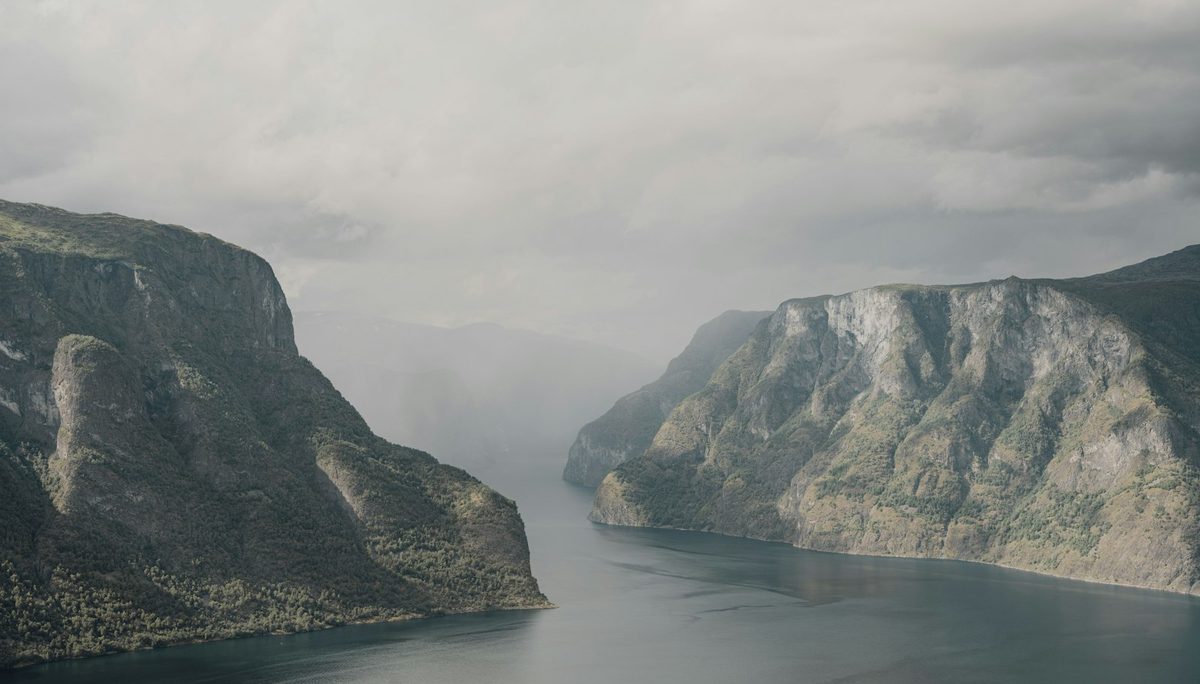
A Hanseatic port, a railway that drops 860 metres, glaciers, hairpin bends and an Art Nouveau town: an eight-day route up Norway's fjord coast.
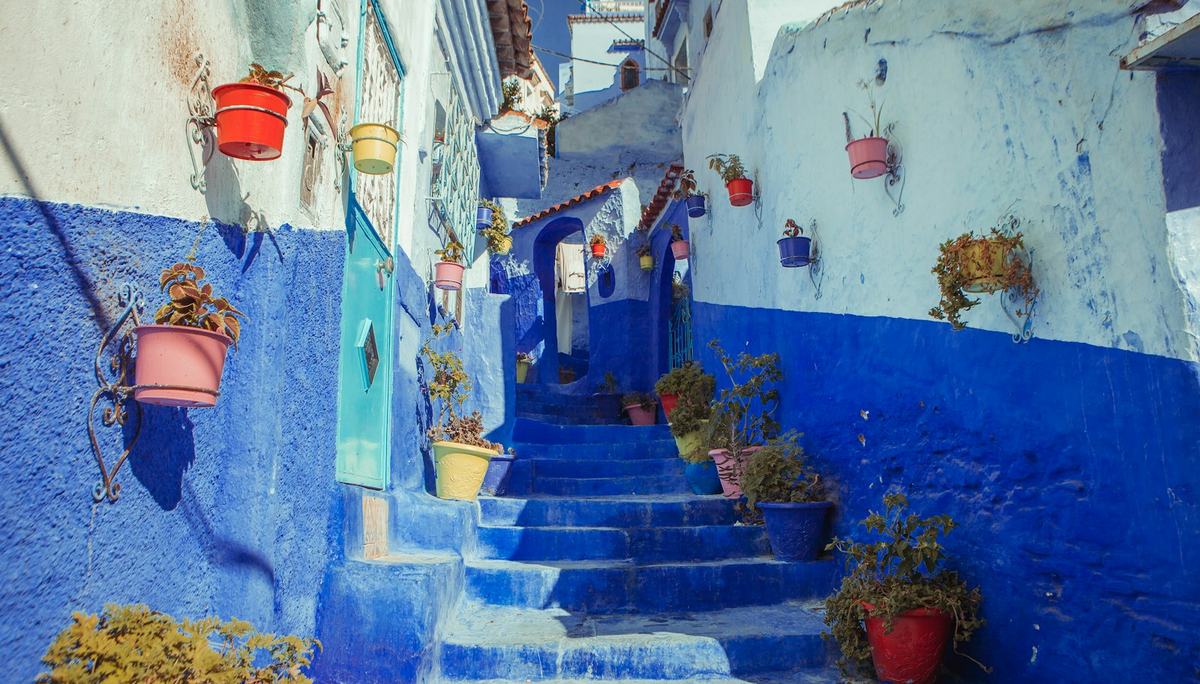
Greener and gentler than the south: Tangier's medina, Tetouan's Andalusian souks, the beaches of the Tamuda Bay and the blue town of Chefchaouen.