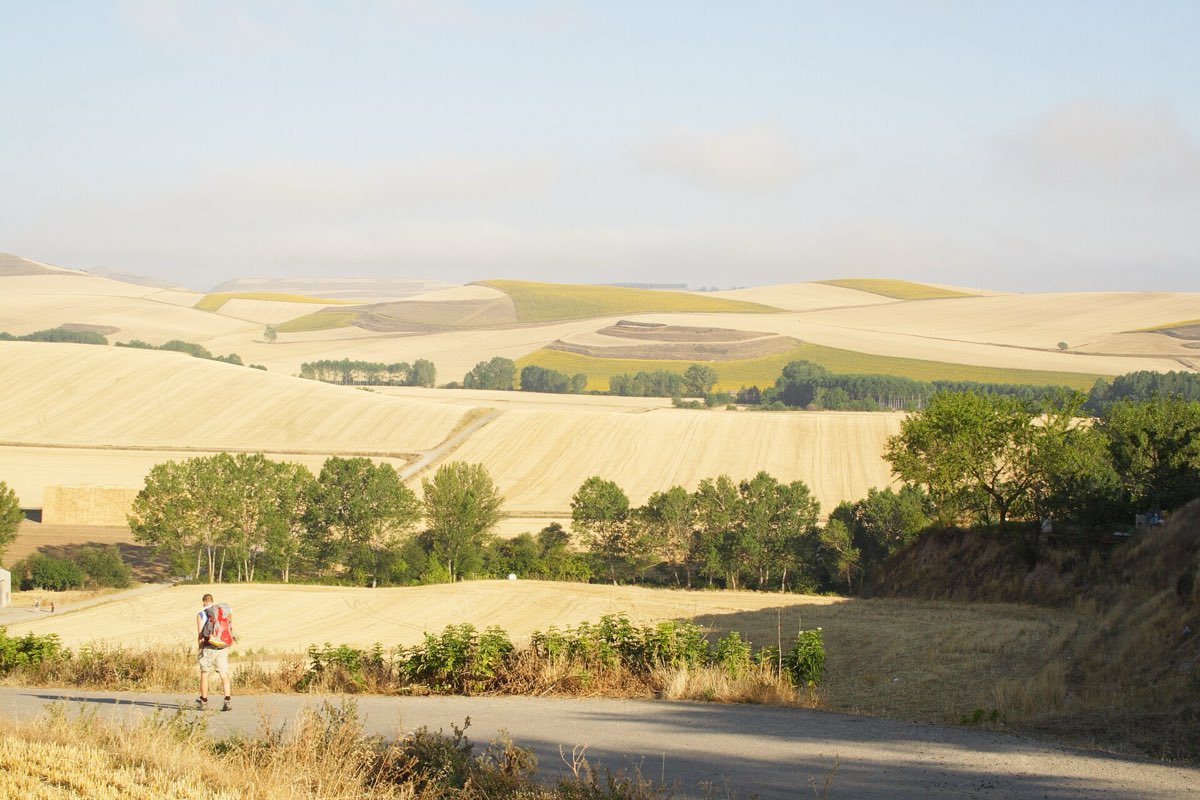
Every morning, on a dozen roads across northern Spain, people shoulder a pack and start walking west. Some left home a month ago. Some began yesterday. All of them are heading for the same square in the same small Galician city, and for the cathedral that closes one side of it.
The Camino de Santiago, the Way of Saint James, is not one path but a web of old pilgrim roads that meet at Santiago de Compostela. In 2025 the Pilgrim's Office there handed out 530,987 certificates of completion, six per cent more than the year before, and 57 per cent of them went to people from outside Spain. That figure counts only those who asked for the certificate; more people than that walked.
This guide is for someone deciding whether to join them. It covers where the road comes from, which route suits which walker, what the certificate requires, what research says the walk does to people, and how to make the days work.
A road with twelve centuries behind it
The story begins in the ninth century, when a tomb found in the far north-west of the Iberian peninsula was declared to be that of the apostle James. A church rose over it, then a city around the church. By the twelfth century pilgrims were arriving from all over Europe, and a manuscript known as the Codex Calixtinus included what is often called the continent's first travel guide: a book of stages, rivers, hostels and warnings for those on the road.
The pilgrimage faded over the following centuries and came back in the late twentieth. In 1987 the Council of Europe named the Santiago routes its first Cultural Route. UNESCO had listed the old town of Santiago in 1985; it added the main Spanish road, the Camino Francés, in 1993, the routes through France in 1998, and four routes across northern Spain in 2015.
What you walk today is that same network, waymarked with yellow arrows and scallop shells. The stone bridges, the village fountains and the Romanesque churches along it were built for people doing exactly what you are doing.
The routes, and who each one suits
You can start anywhere. In practice most people choose one of six roads, and the choice shapes the whole experience: how long you are away, how many people you meet, how hard the days are.
Camino Francés. The classic. It crosses the Pyrenees from Saint-Jean-Pied-de-Port in the French Basque Country, then runs through Navarre, the vineyards of La Rioja and the high, open plain of the Meseta before climbing into green Galicia. The full road is nearly 800 km and takes about five weeks on foot. It has the most hostels, the most cafés and the most company. If you want to walk alone but never be lonely, this is the one.
Camino Portugués. The second most walked. From Porto it is roughly 250 km, about two weeks, either inland through small towns or along the Atlantic. The coastal variant is growing faster than any other main route: its numbers rose by nearly 20 per cent in 2025. It is gentler underfoot than the Francés and a good first Camino.
Camino del Norte. More than 800 km along the Bay of Biscay, from the Basque coast through Cantabria and Asturias. The sea is on your right for weeks. It is hillier and quieter, with longer gaps between places to sleep, and it rewards walkers who are already fit.
Camino Primitivo. The "original way", said to follow the journey of the first royal pilgrim from Oviedo. A little over 300 km through the mountains of Asturias and Galicia, it is short, steep and beautiful, and can be done in two weeks.
Camino Inglés. The road of the pilgrims who once arrived by ship from northern Europe. From the port of Ferrol it is a little over 110 km: a complete Camino that fits into a week's holiday.
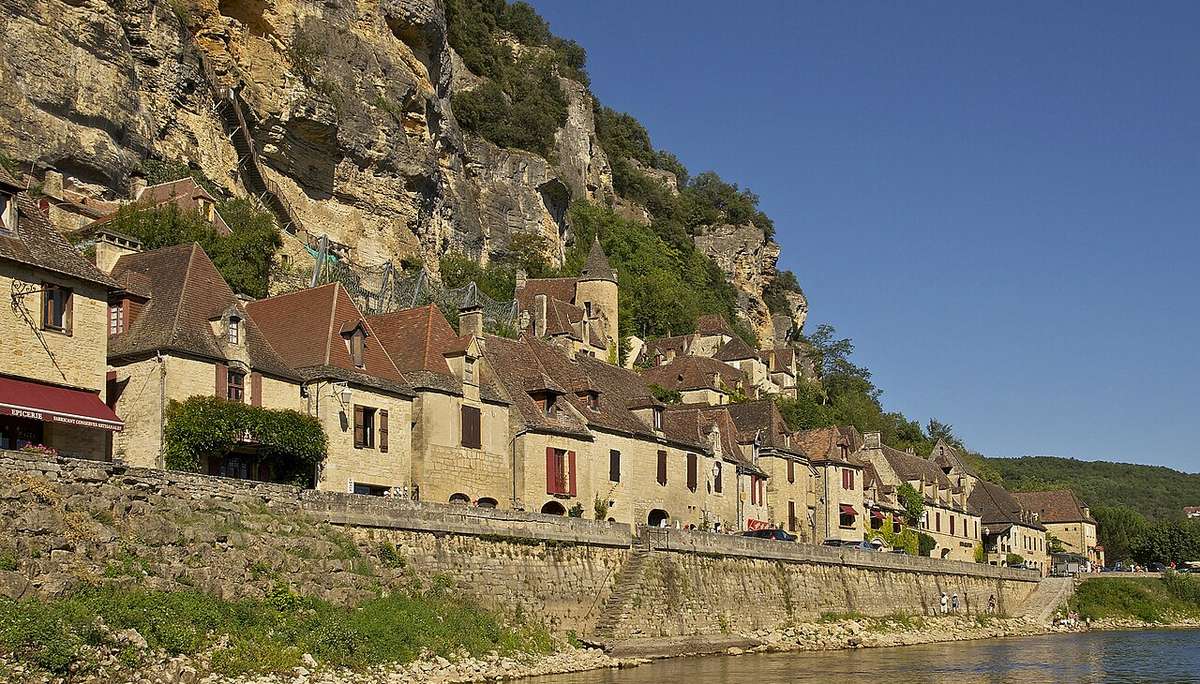
From France. Four historic roads cross France towards the Pyrenees. The best known starts in Le Puy-en-Velay and reaches Saint-Jean-Pied-de-Port after some 750 km of volcanic plateaux and stone villages. Many French walkers do it a fortnight at a time, over several years.
And when you reach Santiago, the road does not quite end. A further 90 km leads to Fisterra, the cape the Romans took for the edge of the world, where the path finally runs out of land.
What the Compostela asks of you
The Compostela is the certificate, written in Latin, that the cathedral has given to pilgrims for centuries. You do not need it to walk. If you want it, the Pilgrim's Office sets the conditions:
- Walk or ride on horseback at least the last 100 km, or cycle at least the last 200 km, without gaps, on one recognised route, finishing at the cathedral.
- Carry the credencial, the pilgrim's passport, and have it stamped and dated at the start and the end of each stage. Hostels, churches, cafés and town halls all have a stamp.
- Make the journey for religious or spiritual reasons.
You may also walk the Way in pieces, coming back each year, as long as the stages follow one another in order.
The 100 km rule explains the most striking fact about the Camino: the last stretch is far busier than the rest. On the Francés, the town of Sarria, just over 100 km from Santiago, is where more walkers begin than anywhere else. The final days are sociable, sometimes crowded. The weeks before them are not.
What the walk does, according to the evidence
Pilgrims have always said the road changes them. For a long time nobody had measured it. The best attempt so far is the Ultreya study, published in 2024 in the Journal of Happiness Studies. Researchers followed 444 pilgrims and compared them with 124 people who took an ordinary holiday instead.
Both groups answered the same questionnaires before and after. The pilgrims' psychological distress fell and their well-being rose, and most of those gains were still there three months after they came home. Compared with the holidaymakers, the pilgrims showed larger rises in positive mood and in satisfaction with life.
The most interesting result is the explanation the data point to. Much of the benefit ran through something the researchers call valued living: the sense of spending your days in line with what matters to you. The Camino seems to help less because it is a break than because, for a few weeks, what you do each day and what you care about line up.
The study has clear limits, and its authors state them. Nobody was assigned to walk; people who choose a pilgrimage may differ from people who choose a beach. The three-month follow-up covered the pilgrims only. So the honest summary is that walking the Camino goes together with feeling better, more than a holiday does, and that we cannot yet say how much of that the road itself causes.
One caution follows. A long walk is not a treatment. If you are struggling with depression or anxiety, talk to a doctor or a therapist first; the Camino can sit alongside proper care, not replace it. The same goes for a retreat, which raises many of the same questions.
When to go
The season runs from spring to autumn. Summer brings the largest crowds and, on the Meseta, serious heat. May, June and September are the months most walkers recommend: long days, mild air, everything open. In winter many hostels close, especially on the quieter routes, and the mountain passes can be under snow.
One date is worth knowing. A Holy Year is declared whenever the feast of Saint James, 25 July, falls on a Sunday, and 2027 is the next one. Holy Years draw many more pilgrims than usual. If you want the festival, go then. If you want quiet, choose another year, or one of the less travelled roads.
Practical: making it work
Sleeping. Pilgrim hostels, albergues, line every route: public ones run by regions and towns, parish ones run on donations, and private ones you can book. They mean shared dormitories, early nights and early starts. Small hotels and guesthouses exist almost everywhere for the nights you need a door that closes. In high season, book ahead on the last 100 km.
Distance. A typical stage is 20 to 25 km, five or six hours of walking. You do not have to follow the guidebook stages. Shorter days, with a long lunch in a village square, are often the ones people remember.
Weight. The most repeated advice on the Camino is to carry less. A common rule of thumb is a pack of about a tenth of your body weight. Two sets of walking clothes, something warm, something for the rain and a pair of sandals for the evening will do; there are shops and washing lines all along the way. If carrying is a problem, luggage transfer services move bags from one stop to the next on the main routes.
Feet. Wear shoes you have already walked far in. Train beforehand with the pack you will carry, on consecutive days, because the difficulty of the Camino is not any single stage but getting up to do it again. If you have a health condition, check with your doctor before committing to weeks of daily walking.
Company. You can go alone. Many people do, and few stay alone for long: the same faces reappear at the same fountains, and the standard greeting, "Buen Camino", is an invitation to talk. You can also keep your own silence for a day, and nobody will mind.
The long view
The Camino ends in the Praza do Obradoiro, in front of the cathedral's granite towers, where people sit down on the paving stones with their packs still on and look up. Some cry. Some laugh. Many just stay there for a long time, not quite ready for it to be over.
What they have done is simple. For some days or weeks they woke up, walked, ate, talked to strangers, washed their clothes and slept. They owned what they could carry. The research suggests that what stays with them afterwards is not the scenery but the feeling of days that made sense.
That is worth knowing before you go, because it means the road is less a place than a practice. You can begin in Saint-Jean, in Porto or in Ferrol. The point is to start walking, and to notice what it is like when the day asks only one thing of you.
Some links may be affiliate links. Read our
editorial & affiliate disclosure.
Part of our reading guide on travel & retreats.